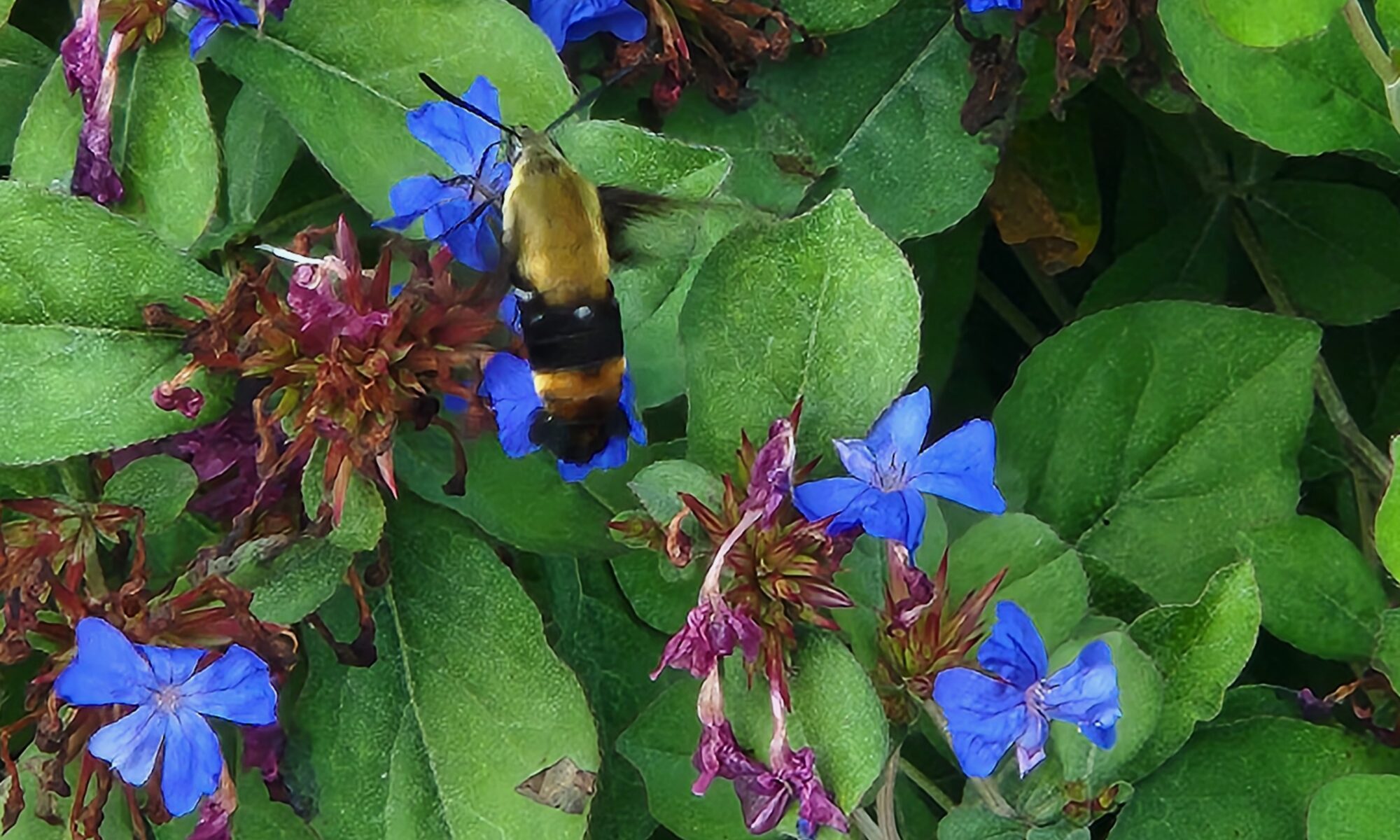
UT Gardens’ August Plant of the Month
Submitted by Shalena Durkot, garden coordinator and horticulturist, UT Gardens, Crossville
If you are looking for an easy-to-grow groundcover that provides beautiful blue blooms and fall color, then look no further because this one is for you.
Ceratostigma plumbaginoides, commonly called hardy plumbago or leadwort, has a long history dating back to the 1800s in China where it grows in rocky places and foothills. It has been cultivated in various gardens and landscapes across the United States and won awards for its outstanding performance.
Plumbago can be grown in zones 5 to 9 with an average size of 8 to 12 inches tall and 12 to 18 inches wide. It typically blooms from July to September but can last until frost. The cool fall temperatures bring out a beautiful red hue to the foliage, which contrasts nicely with the blue blooms. Pollinators such as hummingbirds, butterflies, and hummingbird moths also enjoy them.
Growing conditions are quite easy for this outstanding perennial. Plumbago can be planted in full sun to part shade. It is drought tolerant and not bothered by high humidity but appreciates some afternoon shade in hot summer climates. Plumbago is suitable for a wide range of soil conditions, including nutritionally poor soil and clay, but avoid wet and poorly drained locations.
Apart from being easily grown, dependable, and long-lived, plumbago has notable deer resistance. It is not prone to diseases or insect issues other than occasional powdery mildew. Plumbago is an excellent choice for groundcover, as it produces chemicals that inhibit other plants growth like unwanted weeds. In addition, plumbago grows quickly and spreads by rhizomes, making it great for erosion control.
Other practical uses for plumbago are rock gardens, borders, or a spiller in a container. Companion planting is also a useful tactic. Plumbago can be slow to emerge from winter dormancy, which makes it great for interplanting spring bulbs like daffodils, tulips, and hyacinths. Once bulb foliage begins to wither, the plumbago will begin to fill in. Consider color contrast as well. The true- blue blooms pair well with deep red-orange gaillardia, bright yellow coreopsis, or beautiful ruby hydrangeas.
Plumbago can be easily propagated by division, leaf cutting, root cutting, and by seed. Look for this wonderful groundcover by the garden entrance at the Crossville location. You can also find great information about plumbago and other groundcovers in UT Extension publication W874E Groundcovers for Tennessee Landscapes.
The UT Gardens includes plant collections located in Knoxville, Crossville and Jackson, Tennessee. Designated as the official botanical garden for the State of Tennessee, the UT Gardens are part of the UT Institute of Agriculture. The Gardens’ mission is to foster appreciation, education and stewardship of plants through garden displays, educational programs and research trials. The Gardens are open during all seasons and free to the public.