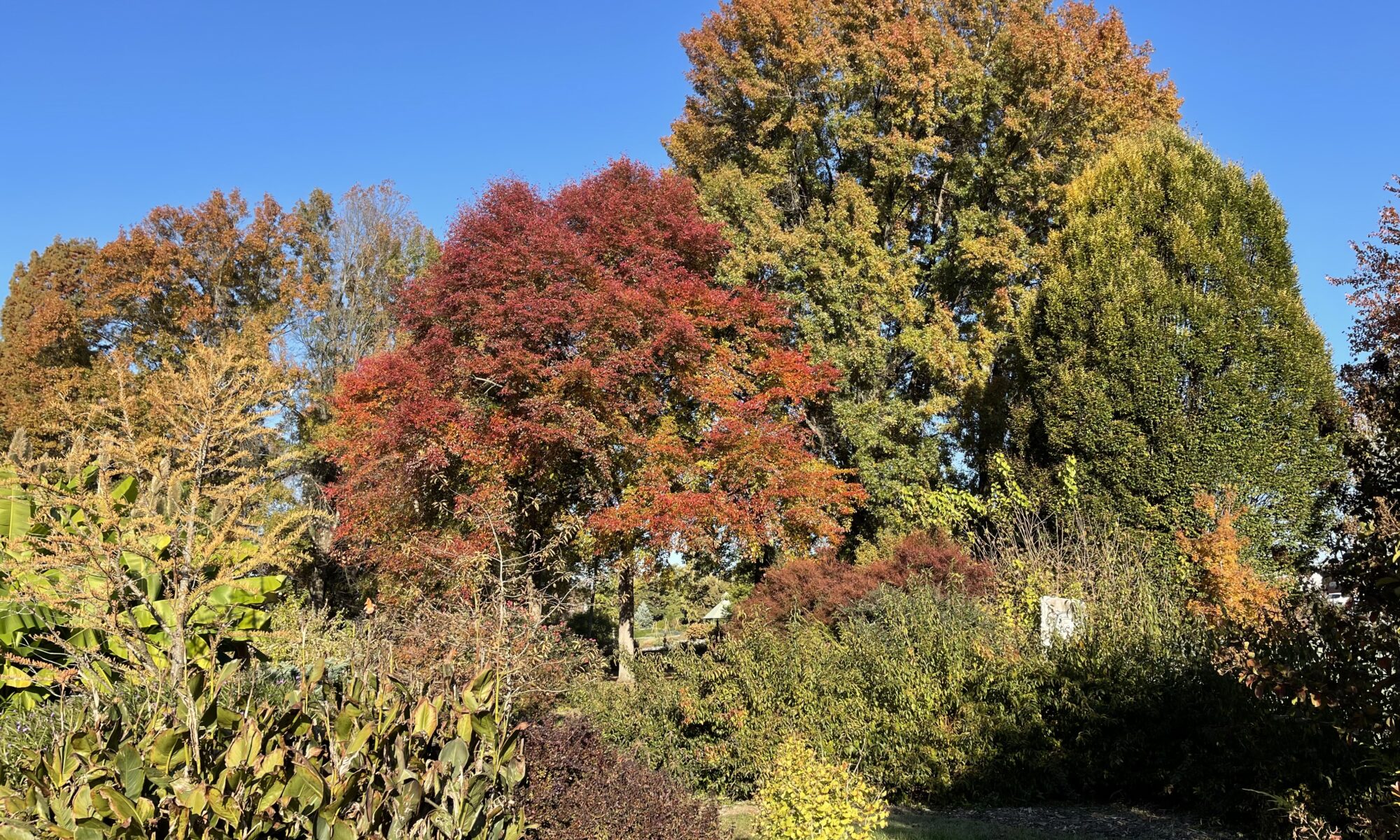
UT Gardens October Plant of the Month
Submitted by Whitney Hale, Tennessee State University Extension agent, Knox County, and former education coordinator, UT Gardens Knoxville
Certain plants are as much a part of our identity as our childhood home or a beloved hobby. Black tupelo trees are a perfect example of a plant in the American South that is just part of who we are.
Nyssa sylvatica, known by several common names including black or sour gum, tupelo tree and even beetlebung, is a tree native to the Eastern United States that grows 30-70 feet tall and 20-30 feet wide. It provides excellent shade in the home landscape and, as an overstory tree, looks great when planted near smaller trees, shrubs and groundcovers.
This tree tends to grow best in full to part sun and acidic, somewhat moist soils (especially when young). Tupelo trees have a strong taproot, which can make transplanting difficult; therefore, you should select container-grown or bare root plants rather than ball and burlap. Planting bare root trees should occur in spring, but container grown trees can be planted in the fall with adequate watering. Don’t be afraid to group them with understory plants like dogwood and azalea.
Sour gums dazzle in autumn when their glossy green leaves transition to a spectrum of orangey-red to dark red (depending on the variety). Female trees produce small bluish-black drupes that are eaten by many birds and mammals. Since they are dioecious, you must have both a male and female tree to get fruit.
Delicious, sweet honey from bees visiting tupelo’s inconspicuous flowers is prized by many, though the highest value tupelo honey comes from black gum’s relatives Nyssa ogeche and Nyssa aquatica. Tupelo honey is often showcased in our southern culture. It appears in popular restaurants and even Van Morrison’s album and title track of the same name.
Many varieties exist including ‘Zydeco Twist,’ ‘Wildfire,’ ‘Autumn Cascades’ and ‘Snow Flurries.’ Red Rage black gum resists leaf spot, which is one of the few concerns with this species.
Be sure to find the set of black gum trees between the monarch waystation and the wetland ponds at UT Gardens, Knoxville. I love to view them from the Neyland Greenway, especially at the peak of their color. UT Gardens, Jackson has ‘Wildfire’ near the north side of the main parking lot and several straight species throughout the garden. This species is also represented at UT Gardens, Crossville.
Next time you taste tupelo honey or listen to a great song, think about the plants that are just part of who you are!
The UT Gardens includes plant collections located in Knoxville, Crossville and Jackson, Tennessee. Designated as the official botanical garden for the State of Tennessee, the UT Gardens are part of the UT Institute of Agriculture. The Gardens’ mission is to foster appreciation, education and stewardship of plants through garden displays, educational programs and research trials. The Gardens are open during all seasons and free to the public.