UT Gardens’ February Plant of the Month
Submitted by James Newburn, managing director, UT Gardens, Knoxville
We have lots of tears being shed in our State Botanical Gardens these days, but don’t be concerned. It’s simply because each of the UT Gardens campuses continues to develop fine collections of weeping trees.
Seriously though, plant breeders and nursery professionals are ever expanding the choices of weeping species. Weeping plant forms appeal to gardeners and landscapers because they can provide versatile attributes. Depending on site placement and companion plants, they can provide a graceful, elegant background or screen, or become a brilliant, in-your-face specimen plant. Last month we included a photo of a weeping European hornbeam with our Plant of the Month article showcasing just what a focal point a weeping plant can become.
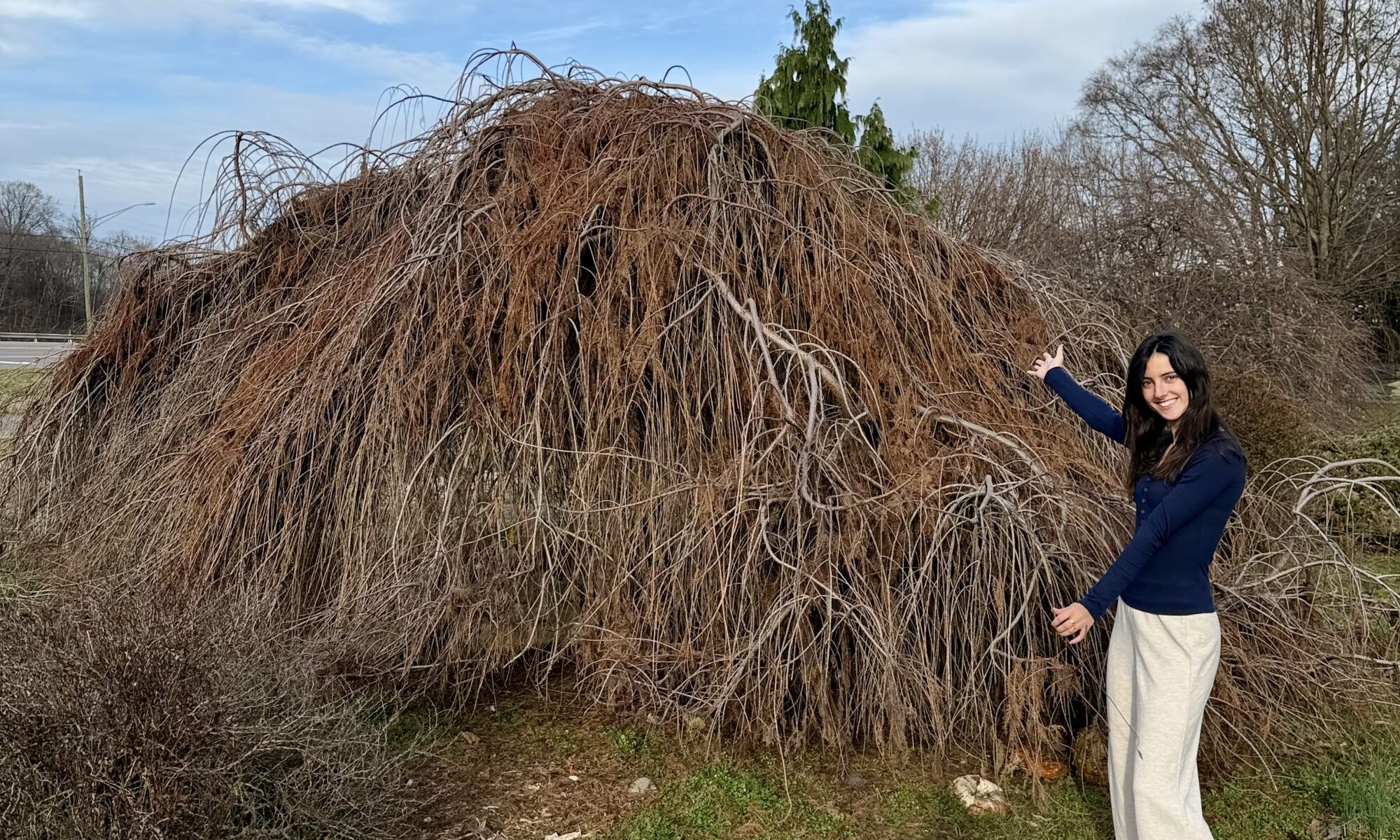
Our February plant, Taxodium distichum ‘Cascade Falls’, is a perfect choice for what it brings to the garden, with or without a needle on it. It is a deciduous conifer, so it drops its needles in fall and produces cones that are sterile. Fall color is burnt orange to coppery cinnamon. Grafted onto our native bald cypress, this weeper reaches 10 to 15 feet tall and wide in 15 to 20 years. Your kids may see it hit 30 feet. As Jason Reeves of the Jackson Gardens once wrote, ‘Cascade Falls’ “can look like a giant Mr. Snuffleupagus (a wooly mammoth) from PBS’s Sesame Street with multiple upright weeping leaders to one central leader with numerous cascading branches.”
It can be planted almost anywhere that’s in full sun and is hardy from zones 4-9. Growth does not appear to be impeded by poor or clay soil. Seasonal flooding, if planted in low lying areas, is tolerated, and, in fact, it is as happy growing in standing water as it is in well-drained soil. Cypress “knees,” upright root growth that emerges above the soil or water line, may form when grown in wet or irrigated sites.
Perhaps the most fun characteristic of ‘Cascade Falls’ is during the growing season when the needles have emerged. Its weeping form creates the greatest fort Mother Nature can offer. Imagine as a kid (or kid at heart) being able to stand (or duck) under the branches of a tree that surrounds you. You can hide in this cloak of soft, fine-textured, sweet-smelling greenery that weeps to the ground around you and have a good cry, or pretend it is a hobbit’s home, or a duck blind. This tree’s form stimulates the imagination.
After needle drop, the complexity of its branching pattern and the overall structure needed to support itself is revealed. The unique sculptural effect of ‘Cascade Falls’ puts this bald cypress front and center in the winter landscape.
No two of these trees ever look the same because of their weeping (twisted) nature. As a specimen, this outstanding conifer is unique in its four-season appeal. Plant it where it can be seen and enjoyed from multiple angles. It will become a living sculpture. ‘Cascade Falls’ appears relatively maintenance free. No serious pests or diseases impact it. Possible winter pruning may be in order every year or two to maintain shape as plants mature. This also aids in discouraging it from rooting where the tear of this weeper touches the ground.
The Knoxville and Jackson gardens contain good specimens of ‘Cascade Falls’, though you’ll find examples of weeping conifers at all sites.
The UT Gardens includes plant collections located in Knoxville, Crossville and Jackson, Tennessee. Designated as the official botanical garden for the State of Tennessee, the UT Gardens are part of the UT Institute of Agriculture. The Gardens’ mission is to foster appreciation, education and stewardship of plants through garden displays, educational programs and research trials. The Gardens are open during all seasons and free to the public.